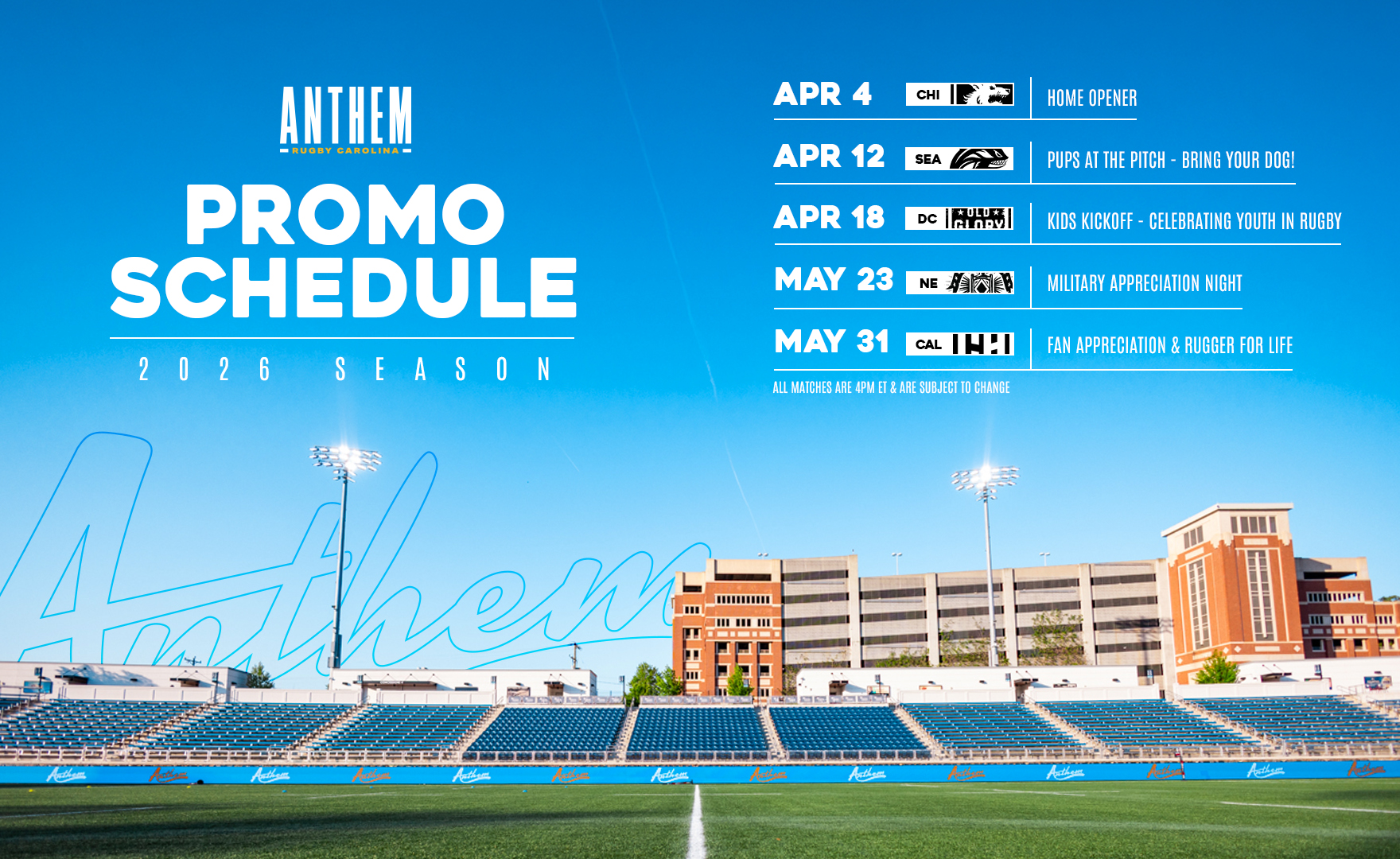





๐ ย Saturday, April 4ย |ย 4:00 PM ET vs Chicago Hounds THE WAIT IS OVER. The 2026 season starts HERE. Join us for the first pregame tailgate of the year as we kick off a brand-new chapter for Anthem Rugby Carolina. We want a packed house from the jump. Come out early, bring the energy, and help us set the tone for the entire season. Show up, show out, and let Charlotte hear you. ๐๏ธย GRAB YOUR TICKETS NOWย โ
PUPS AT THE PITCH
๐ Sunday, April 12 | 4:00 PM ET vs Seattle Seawolves CALLING ALL DOG LOVERS. Your best friend just got a ticket to the match. Pups at the Pitch is the ultimate combo of rugby and four-legged funโbring your dog and settle in for a match day like no other. Tickets for your canine companion are just $15, with $5 from each ticket benefitting local community animal groups. Good dogs, great rugby, and an even better cause. Leash up and letโs go. ๐๏ธGRAB YOUR TICKETS NOW โ
KIDS KICKOFF
๐ Saturday, April 18 | 4:00 PM ET vs Old Glory KIDS 5โ15 GET IN FREE. Thatโs rightโFREE. This is the day we hand the stadium over to the next generation of rugby fans. Kids will get to participate in the match day experience and run onto the pitch after the final whistle. Weโll also be spotlighting TRY Rugby Charlotte, our rugby introduction program thatโs getting kids in this city moving, competing, and falling in love with the game. Want to learn more about youth rugby? Visit NC Youth Rugby Union (NCYRU). Bring the whole familyโthis oneโs a no-brainer. ๐๏ธGRAB YOUR TICKETS NOW โ
MILITARY APPRECIATION GAME
๐ Saturday, May 23 | 4:00 PM ET vs Free Jacks MEMORIAL DAY WEEKEND. Weโre honoring the brave men and women who serve with a match day dedicated to the military. Expect on-field tributes and special in-game moments recognizing active military members, veterans, and military-connected organizations with ties to rugby. A special ticket promotion for military members and their families is in the worksโstay tuned. This is more than a game. This is a salute. Be there. ๐๏ธGRAB YOUR TICKETS NOW โ
RUGGER FOR LIFE โ FAN APPRECIATION DAY
๐ Sunday, May 31 | 4:00 PM ET | Last Home Match vs California Legion ONCE A RUGGER, ALWAYS A RUGGER. Itโs the last home match of the season, and weโre celebrating YOUโthe fans, the former players, the lifers who bleed this sport. Dig out your old club jersey and wear it with pride. College clubs, local teams, weekend warriorsโthis is your day. Join us for a pregame celebration and help us close out the home schedule the right way. Letโs send it out with a BANG. ๐๏ธ GRAB YOUR TICKETS NOW โ
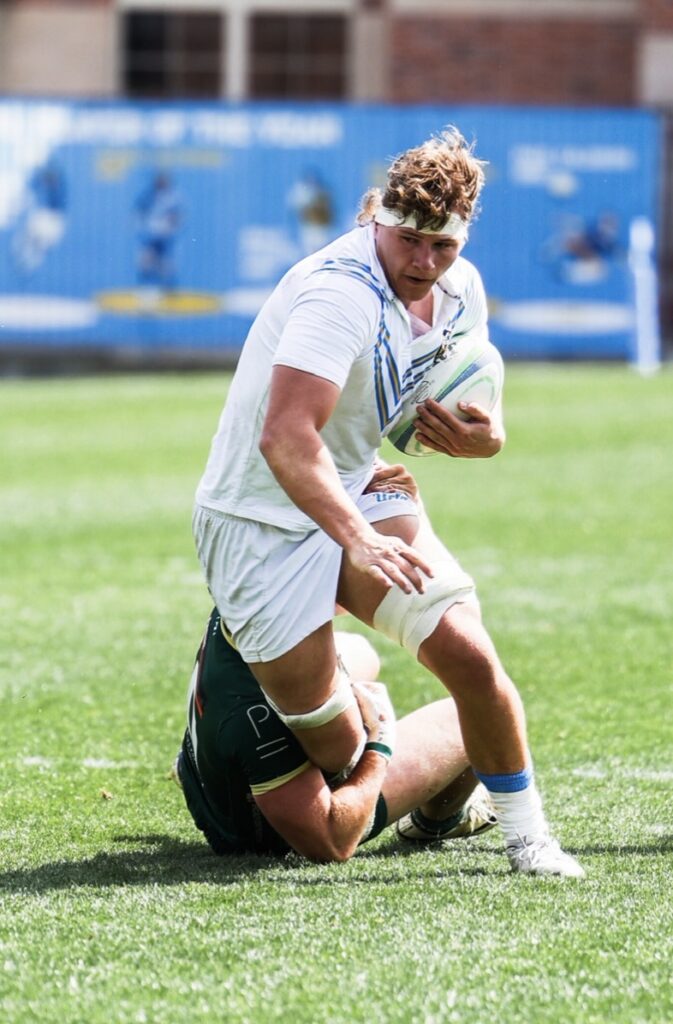
When the first overall pick in the 2025 MLR Draft learned the news, he was in the same city where his father first discovered rugby. Now the 22-year-old lock brings a UCLA All-American pedigree and an Australian finishing school education to Anthem RC’s transformed forward pack.
When Will Sherman’s phone lit up on draft night last August, he was staying with teammates at Randwick Rugby Club in Sydney. The news โ selected first overall by Anthem Rugby Carolina โ arrived in the same city where his father Wade first discovered rugby as a wide-eyed fourteen-year-old. “It was a full circle moment,” Sherman says. “Learning I was drafted in the city where my dad first learned about the sport โ it was remarkable.”
That circular journey encapsulates something larger about American rugby’s trajectory. As the 22-year-old lock prepares for his first professional season, Sherman represents exactly the kind of player Anthem’s groundbreaking partnership between MLR, USA Rugby, and World Rugby was designed to develop: a homegrown American talent with international experience, elite physical tools, and years of peak rugby ahead of him.
The hockey convert (H5)
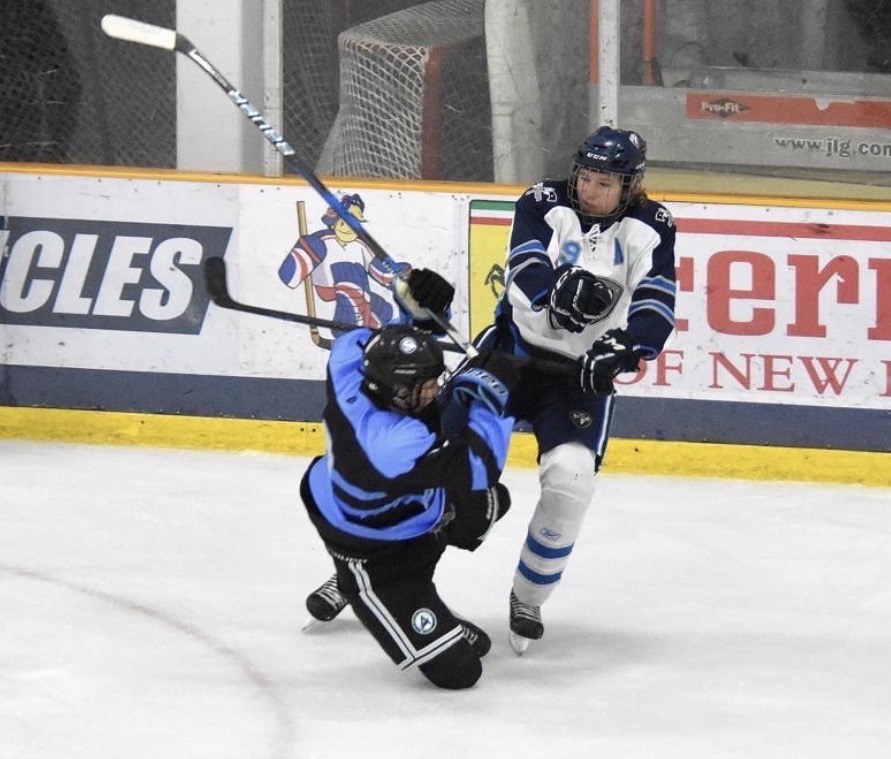
Sherman’s path began on frozen rinks in Salt Lake City. “Hockey was my life,” he admits. “But around sophomore or junior year of high school, I realized Division I hockey wasn’t happening right away. I also started growing into my frame โ rugby became more fun when I was winning those collisions.”
At East High School, he discovered rugby’s brotherhood. “You feel like it’s a second family,” he explains. “You have family for life, anywhere you go.” That sense of belonging would connect UCLA, Randwick, and now Charlotte.
The UCLA standard (H1)
At UCLA, Sherman encountered a program punching above its weight. As a club sport without NCAA varsity status, the Bruins couldn’t “tag” players for admission like rival Cal Berkeley. Yet under head coach Harry Bennett, UCLA developed a “trailblazer mindset” that produced victories over Oxford, a top-ten national ranking, and multiple number one overall draft picks โ a feat no other school has managed.
Bennett professionalized UCLA’s approach with the “1%-ers”: being fifteen minutes early, bringing notebooks to meetings, and prioritizing recovery. Those habits proved essential when Bennett encouraged Sherman to seek international experience, effectively building him a bridge to Australia.
Randwick’s finishing school (h3)
That bridge led to two transformative months at Randwick RFC. Founded 121 years ago, the Sydney club has produced Wallabies legends from David Campese to George Gregan. Sherman arrived alone and initially daunted. “I didn’t know anyone,” he recalls. “But as soon as I rocked up to training, everyone made me feel super welcome.”
The rugby provided no comfort zone. “It’s very fast โ they focus on speed, keeping the ball alive,” Sherman says. His education peaked in 2nd Grade with a Man of the Match display featuring thirty-six tackles, leading all players in a defensive masterclass.
“In Australia, the mentality is all about work rate โ grit and toughness,” Sherman explains. “As an aspiring second row, being a workhorse is my bread and butter.”
Before Australia, Sherman toured South Africa with the USA U23s as vice captain, working with Agustรญn Cavalieri (โCucaโ)โ now his head coach at Anthem. That continuity matters. “I learned more from Cuca on the technical side of being a forward in those few weeks than I probably learned my whole time at UCLA,” he admits. Having already built that coaching relationship gives Sherman a head start that most rookies don’t get.
The engine room
Ask Sherman to explain the scrum to American audiences unfamiliar with rugby’s most demanding set piece, and his answer reveals both the poetry and the pain of his position. “Imagine the heaviest load you’ve ever felt coming down on your spine while having to keep every muscle in your body tensed for twenty seconds,” he says. “If you’re not coming out of a scrum seeing stars and almost blacking out, you’re not doing it right.”
It’s the intensity of that moment โ eight forwards on each side generating forces that would flatten most humans โ that Sherman wants new fans to appreciate. “When it’s at a deadlock, the force exactly equals each other,” he explains. “Look closely and you’ll see people’s legs bouncing, bodies shaking. Then watch how they react getting up off the ground. That’s probably the hardest part of the game.”
He’s passionate about preserving rugby’s physicality. “The scrum is such an important part of the game.” For a former hockey player who traded ice for grass, Sherman has become the scrum’s unlikely evangelist.
Built to compete
Sherman arrives at Anthem during the most transformative period in the franchise’s young history. With sixteen-plus new signings, ten capped USA Eagles, and a coaching staff led by Cavalieri from day one, the 2026 squad has been assembled with a clear purpose: to compete immediately while continuing to develop American talent for the international stage.
Sherman’s response when asked about his expectations is immediate: “I hate losing more than I like winning. I’m going to do everything I can to make a positive impact โ pushing teammates in training, ensuring ‘no reps off.'” The accountability runs both ways. “I want my teammates to hold me accountable, and I’ll do the same for them.”
He frames the challenge through his core rugby value โ brotherhood. “Team success is a result of team culture,” he says. “That willingness to put your body on the line for your teammates โ it’s different from American football or basketball, which can be more individual-focused.” With ten capped Eagles on the roster โ including veterans like Luke Carty and Moni Tonga’uiha โ Sherman believes that culture is already taking shape.
He’ll lock down alongside an elite second-row room: Sam Golla (2023 number one pick), English lock James Scott, and South African Johan Momsen. Three consecutive number one overall picks in the same forward pack is unprecedented in MLR. “I’m excited to learn from guys with professional experience,” Sherman says, “especially James Scott and Johan Momsen.”
Looking forward
Sherman’s first professional match comes March 28 at California Legion against former UCLA roommate Josh Cox. “He’s got a good step, but if I can catch him, it’s going to be a problem for him,” Sherman jokes.
Beyond the season opener lies a longer vision. He speaks passionately about the 2031 Rugby World Cup on American soil as rugby’s breakthrough moment in this country. “Every player on the field has to be able to do it all โ pass, run, tackle,” he says. “Rugby players are the most well-rounded athletes.”
He models his game on hybrid forwards like South Africa’s Pieter-Steph du Toit and Ireland’s Tadhg Beirne. “I’d love to see myself as a 4/6,” he says. “Being able to play anywhere in the back five is super beneficial for Eagles aspirations.”
The circle that began with Wade Sherman’s teenage discovery in Sydney now opens anew with his son’s professional debut in Charlotte โ measured not just in results, but in the distance traveled from ice rinks to engine rooms, from one country’s rugby tradition to another’s rugby future.
Anthem RC’s general manager has worked at every level of American rugby. Now, after the most transformative roster overhaul in MLR history, he and his team are ready to show what this groundbreaking franchise was always meant to become.
Mark Carney’s shoulders were already shot by the time he graduated high school in Arizona. He’d been playing men’s club rugby for Tempe Old Devils since he was sixteen, an English kid from Cumbria who’d swapped the wind-battered pitches of Sedbergh School for the Sonoran Desert. The boots got hung up. The obsession with rugby did not.
Two decades later, Carney finds himself as general manager of Major League Rugby’s most ambitious franchise โ Anthem Rugby Club, the Charlotte-based team born from a groundbreaking partnership between MLR, USA Rugby, and World Rugby. When it was announced in January 2024, World Rugby Chief Executive Alan Gilpin called it “a major milestone” in an overall strategy to grow rugby in the United States. Then MLR Commissioner Nic Benson described it as “a game-changer for American rugby.” The vision was bold: create a professional team committed to developing America’s best rugby talent ahead of hosting the 2031 Rugby World Cup on home soil.
When Carney took over as GM in March 2025, the vision was intact but the results had yet to follow. Now, after a full off-season spent reshaping the roster from top to bottom, he believes the breakthrough is here.
“This is not the Anthem of ’25 or ’24,” he says. “This is our time.”
The numbers back up the ambition. Carney orchestrated sixteen-plus signings over the winter, bringing in James Scott โ arguably the league’s most consistent lock over the past two seasons โ from Chicago, Johan Momsen, the 2021 MLR Forward of the Year, Luke Carty, a capped USA flyhalf, and Jordan Trainor, who brings Super Rugby pedigree from New Zealand. The 2026 roster now features ten capped USA Eagles, more than any other team in the league. Anthem was the first MLR club to complete its roster for the new season.
It is, by any measure, the most transformative squad overhaul in MLR history. But Carney is quick to point out that it was not assembled in a vacuum. The roster was built in close consultation with USA Eagles head coach Scott Lawrence โ a collaborative dynamic that underscores what makes Anthem’s model so significant.
“The roster development was done in conjunction with Scott,” Carney explains. “He offered input on why we should be looking at this player, and how the players we had in consideration would work within the system we are trying to establish this season.”
This partnership between franchise and national program is central to Anthem’s identity. The club was purpose-built to serve as a high-performance pathway for the USA Eagles โ a model that has already proven successful internationally. World Rugby’s investment mirrors what Fiji implemented with the Drua franchise, which propelled Fiji to the 2023 Rugby World Cup quarterfinals. The ambition for Anthem is no less significant: to accelerate the development of American players and give the Eagles their best chance of competing on the world stage.
A career built for this moment
Carney’s path to leading this project reads like a tour of American rugby’s entire development pyramid. Born and raised in England, he attended Sedbergh, one of the country’s most storied rugby schools, where he watched future internationals like James Simpson-Daniel and Phil Dowson run out for the first XV. After relocating to the United States at sixteen, he earned a bachelor’s degree in sport management from Salem State, an MBA from Florida Atlantic, and cut his teeth at USA Rugby’s headquarters in Boulder, Colorado, where he helped develop a multi-million-dollar proposal to reinstate rugby in the Olympics.
A stint as executive director of Rugby NorCal followed โ leading the country’s largest state-based youth rugby organization, serving more than five thousand players, coaches, referees, and administrators. From there, roles with Rugby ATL and RFC LA brought him into professional team management. He remains the only MLR GM to have physically relocated a franchise, moving the Atlanta operation to Los Angeles.
“I had this vision when I was a young guy of being this big-time sports agent,” Carney says. “My journey has evolved. Finding myself as a general manager of a professional sports franchise at thirty-eight โ I can really be proud of that. But I just want to be a servant of the game. I want to try and help take the sport of rugby in the United States to the next level.”
That servant mentality is what drew him back to rugby after a brief step away following the LA chapter. “I thought rugby was kind of done with me,” he admits. “And then a few months later, Scott called me up and asked if I would come take over as GM for Anthem.”
Measuring success beyond the scoreboard
While the win column has yet to reflect Anthem’s progress, the development metrics tell a compelling story โ one that goes directly to the heart of why this franchise exists.
In 2025, Anthem led the league with eighty-six percent of playing minutes going to U.S.-qualified players โ more than any other MLR team. Thirteen players made their MLR debut wearing an Anthem jersey, also a league high. And on March 30 in Seattle, Anthem became the first team in MLR history to field an entirely U.S.-qualified 23-man roster โ a milestone that captured the essence of the franchise’s mission.
Six Anthem players earned USA Eagles summer squad selections that year, the most from any MLR team. Junior Gafa won the 2024 MLR Rookie of the Year award. And the team pushed several opponents to the wire last season, including Houston, who went on to contest the MLR final.
“Everyone last season started to respect us a little bit more,” Carney says. “They saw what we were building, and we were no longer taken for granted.”
These are not consolation prizes. They are proof of concept โ evidence that a franchise designed to develop American rugby talent is doing exactly that.
A roster built to compete and develop
For 2026, the recruitment philosophy is what Carney describes as a hybrid model โ targeting players who are consistent in their positional fundamentals but versatile enough to adapt week to week. He cites Tom Pittman, equally capable at flyhalf or as a distributing inside centre, as emblematic of this approach.
“Rugby is a very tactical game โ it’s a chess match,” Carney explains. “Depending on the matchup and the anticipated roster we’ll face, that will determine who we start, who we have on the bench, and who we sit. The beauty of this squad is it gives us the versatility to throw the ball around, or play more direct, or play a tactical kicking game.”
The select international players Anthem has recruited are chosen not for name recognition but for the mentorship and leadership they bring. Trainor, with years of NPC and Super Rugby experience, will be an invaluable resource for the squad’s young backs. Hooker Ramiro Gurovich fills the same role for developing front-rowers Seth Smith and Campbell Rob.
“Jordan is going to be an amazing mentor for Julian Roberts, for Erich Storti, for EJ Freeman, for any of the young backs we have,” Carney explains. “As leaders, guys like Jordan and Ramiro can help translate the pictures we show the guys in previews and reviews into actionable items on the field for the younger players we have. It’s the little nuances that only experience at a higher level can give you that will help these promising rookies develop.”
Building toward 2031
Carney’s vision extends well beyond the 2026 season. With the Rugby World Cup set to be hosted on American soil in 2031, the window for development is both urgent and exciting. He points to Italy’s recent resurgence โ their U20s graduates now demolishing the scrums of established Six Nations opponents at senior level โ as a model America can aspire to follow.
“Italy are going to compete for quarterfinals, semi-finals in the World Cup next year,” Carney says. “They’re doing it with fewer resources than England or France or Ireland, and they’re doing it better than virtually anyone else in the world right now. That is a case in point in what it looks like to really develop players with a five-to-ten-year plan.”
For Anthem, the work starts locally. The club’s community engagement programs are already embedded in Charlotte schools, with a waitlist for equipment from schools eager to introduce rugby to their students. The ambition is to make Charlotte not just a home for professional rugby, but a destination for international matches and a hub for the sport’s growth across the Carolinas.
“We need to show results this season,” Carney says. “We need to build confidence in World Rugby and USA Rugby to keep this thing going. Success on the field and success off the field โ in terms of our marketing, our branding, how we engage the community and build that fan base in Charlotte โ is of the highest importance.”
Carney believes the pieces are now in place: a roster with genuine depth and experience, a coaching staff led by Agustรญn Cavalieri, a commercial operation growing under Team President Patrick Stack, and a mission that resonates with every stakeholder from World Rugby’s executive board to the families turning up at American Legion Memorial Stadium on Saturday afternoons.
“We’re going to play a fun and physical, American brand of rugby,” he says. “And what that looks like โ the fans are going to have to come and watch!”
Born in Canada, raised across four countries, and developed in England’s Premiership system, Anthem RC’s back rower has bet his career on American rugby. After a try-scoring USA Eagles debut at his home stadium, he’s ready to prove that bet was the right one.
Makeen Alikhan’s path to professional rugby in Charlotte, North Carolina, began on Australia’s Gold Coast, where his father Riz โ a former rugby player in Canada โ put a ball in his hands at five years old. By the time he was a teenager, he’d lived on three continents. By eighteen, he was training alongside Marcus Smith and Danny Care at Harlequins, a club in the UKโs Rugby Premiership. By twenty, a back injury and a torn hamstring had kept him off the pitch for nearly two years.
Now twenty-four, with five years of professional experience behind him, Alikhan enters his second season at Anthem RC as one of the most complete back rowers in Major League Rugby โ and one of the players who best embodies what this franchise was built to do.
“Rugby doesn’t last forever, does it?” he says. “You’ve got to take the opportunities.”
Four countries, one rugby education
Alikhan was born in Vancouver to Riz, who is British, and Candace, who is American. The family moved to Florida, then Australia, where rugby consumed his childhood. He tried cricket first but admits he didn’t have the temperament for it. Rugby stuck.
“Growing up in Australia, rugby’s massive โ it’s the first thing you do,” he says. “I think the Australian system at an early stage is more advanced, so when I moved to the UK, I came over in a better place than I would have been just growing up all the way through London.”
The family settled in Surrey, where Alikhan attended Epsom College and emerged as one of England’s most prominent schoolboy talents. He captained the 1st XV, was named to the Schools Rugby Dream Team, and caught the eye of Harlequins, who signed him to their academy during his final year of school โ after he’d put on 15 pounds in two months during lockdown just to earn an invitation to preseason.
“It was a surreal moment,” he recalls. “Coming into that and seeing people you looked up to โ your Marcus Smiths, your Danny Cares โ and being able to train with them and pick their brains. I was very blessed that Harlequins was my first club.”
The injury years โ and the reset
What should have been a steady rise stalled. A serious back injury requiring surgery, followed by a torn hamstring, kept Alikhan sidelined for nearly twenty-two months. Across three seasons at Harlequins, he managed just three senior appearances. World-class back rowers filled the positions ahead of him. The frustration built.
“To go through that at a young age is pretty tough,” he says. “You go through a week or two feeling sorry for yourself, and then you get back into the program. Once you have a plan, you just tick over. But the back injury โ that was ten steps forward and one step back, constantly.”
The turning point came when head coach Agustรญn Cavalieri (โCucaโ) offered him a loan move to the Dallas Jackals in MLR. Alikhan didn’t hesitate. He needed minutes, he needed confidence, and America delivered both.
Over thirteen games in Dallas, he produced over a hundred tackles, ten turnovers, three tries, and helped the Jackals reach the Western Conference Final. More importantly, he stopped thinking about his body and started playing rugby again.
“I just enjoyed playing week in, week out,” he says. “Staying relatively injury-free, getting my confidence back. And Cuca is one of the best coaches I’ve ever had. He made it really easy.”
The bond with Cavalieri proved decisive. When the Jackals folded and Anthem came calling, Alikhan’s decision hinged on one factor. “I didn’t sign my contract until I knew Cuca was coming over,” he says. “That’s the level of trust we have together. I’d follow him to many places in the world.”
A try-scoring debut on home turf
The international recognition Alikhan had been building toward arrived on July 5, 2025, when he came off the bench for the USA Eagles against Belgium โ at American Legion Memorial Stadium, Anthem’s home ground in Charlotte. He scored on debut, finishing off a sequence with a try that turned a promising career into a validated one. His father was in the stands.
“When it happened, it was kind of a blackout moment,” he says. “You watch it back a few times after and you’re like โ did that just happen?”
A week later he was in the squad against Spain. Then came the match against England in Washington, D.C. โ offering the extraordinary prospect of Alikhan facing former Harlequins teammates in an international shirt. By the time he lined up at Murrayfield against Scotland, the nerves were gone.
“The Belgium game, I was so nervous โ I didn’t know what to expect,” he says. “By the time I was playing at Murrayfield, I was like, yeah, this is where I belong. I like this feeling of playing on the big stage.”
Why Anthem
Alikhan had options after the Jackals dissolved. He could have returned to the Premiership. He chose Charlotte โ and paused a veterinary medicine degree at the University of Surrey to do it.
“I wouldn’t want to play for another MLR club,” he says. “There were conversations, but Anthem is my home. How tightly it’s connected to the USA program โ it just makes complete sense for me. It keeps helping me get to that point of the 2027 World Cup, the 2031 World Cup, and make my mark at that level.”
His commitment extends beyond the pitch. Alikhan has embraced his role as an ambassador for rugby in Charlotte, building relationships with local businesses and helping promote the sport in a city that is still discovering it.
“People’s first response is usually, ‘Oh, you’re those guys who play football without pads,'” he says with a laugh. “I tell them: it’s eighty minutes of continuous contact. It’s fast. You’re not bored. There aren’t stoppages every six seconds. And we don’t wear protective gear โ we’re just putting our heads in.”
The workhorse returns
For 2026, Alikhan faces the most competitive back-row selection battle of his career. The arrival of Moni Tonga’uiha, Johan Momsen, and a host of experienced forwards means starting spots are genuinely contested. He welcomes it.
“We have a completely different setup than last year,” he says. “Way more experienced players, a completely new-looking roster. James Scott, the lock from Chicago โ I’m really excited to play alongside him. The experience he’s going to bring to our forward pack is going to be great. And then Carts (Luke Carty, Flyhalf) at ten โ he was phenomenal for the US. He’ll be a huge addition.”
Alikhan’s preferred position is openside flanker โ the seven shirt, the workhorse role. Twenty tackles a game, twenty-plus ruck hits, first around the corner, first into contact. He has spent the off-season working on his footwork, speed, and evasion โ refining the ability to beat defenders in the wider channels that modern back rowers increasingly need.
He has also been refining the less visible parts of his craft. Ask him what happens in the depths of a ruck that fans can’t see, and he smiles, thinking ahead to the unseen battles ahead, relishing the opportunity to battle it out against his fellow backrowers.
“Thereโs lot that happens, and even if itโs out of sight, it can swing a game very quickly.”
What comes next
The vet degree is on indefinite hold. The new ambition is real estate, and eventually a ranch somewhere out west โ Nebraska, Wyoming, or wherever the land is open and the chickens outnumber the people. But that’s for later. Right now, the focus is singular.
“We’re working incredibly hard,” he says. “I know last season didn’t always show that, but we’re extremely excited for what’s to come. We’ve got a new slate, a new team, Cuca setting all the plans from the very start. We’re going to give fans a fast, brutal, physical game of rugby every weekend.”
He pauses, then adds: “We’re going to get the win this year. I know we are.”
The first name ever called in an MLR draft has survived franchise collapses, dispersal drafts, a two-year mission to Argentina, and a championship-winning try at Life University. At 29, the USA Eagles wing says the 2026 roster is the strongest he’s ever been part of.
Conner Mooneyham is a self-described loyal man. He supports the Las Vegas Raiders, a franchise that has tested that loyalty for the better part of his lifetime. So when he chose to join Anthem RC โ a team built around long-term development rather than instant results โ the symmetry was not lost on him.
“I’m a very loyal person when it comes to any sort of sporting team,” Mooneyham says, a grin forming as the comparison lands. “I’m a Raiders fan and they’ve sucked my whole life. So you understand.”
That stubborn devotion runs through everything the 29-year-old wing has done since his father Doug, a former San Diego State rugby player, dragged him onto a pitch in Northern California at eleven or twelve years old. Mooneyham played for Sierra Foothills Rugby Club in the Granite Bay area near Rocklin, and the early returns were bleak. They lost every single game for two years straight. He was the smallest kid on the field, getting thrown around at scrumhalf without much idea of what he was doing. But something about the brotherhood kept pulling him back.
When the family relocated to Texas, Mooneyham continued at Woodlands Rugby Club before being scouted to Life University in Marietta, Georgia โ one of the most dominant collegiate rugby programs in the country. He helped the Running Eagles win the 2016 D1A National Championship as a sophomore, then made a decision that would have tested most sporting careers: he left for a two-year mission to Argentina with The Church of Jesus Christ of Latter-day Saints.
Based primarily in Cรณrdoba, Mooneyham didn’t touch a rugby ball for two years. The mission changed his worldview โ he came home and couldn’t understand why his family had three cars โ but it also gave him a ferocious appetite for the game. “I didn’t even make a read on defense,” he recalls of his first match back. “I just went a thousand miles an hour and hit the guy. Everybody was like, ‘What is up with this dude? There’s no way he was preaching down there. He’s just psycho.'”
He earned his way back into the starting lineup and helped lead an undefeated 2019 season, scoring the winning try against Cal Berkeley with less than five minutes remaining in the national championship final. Then, in June 2020, Major League Rugby held its inaugural collegiate draft โ and Mooneyham became the first name ever called, selected number one overall by the Dallas Jackals.
A professional career forged in upheaval
What followed would have broken less resilient players. Drafted by Dallas, Mooneyham never played for them. Picked up by Austin in a dispersal draft, he thrived for two seasons before the Gilgronis folded. Selected by Rugby ATL in yet another dispersal, he was traded to Seattle before ever suiting up for Atlanta. At the Seawolves he finally found stability, making the playoffs in both seasons and coming off the bench in the 2024 MLR Final against New England.
Then, with a second child on the way and his wife Morgan’s family based in North Carolina, Mooneyham requested a trade to Anthem. “The stars kind of aligned,” he says. “Getting closer to family, friends joining the team, the USA Pathways connection. It all just made sense.”
That Pathways connection is central to Anthem’s identity. As the franchise born from the groundbreaking partnership between MLR, USA Rugby, and World Rugby, Anthem exists to develop American players and accelerate their progress toward the international stage. For Mooneyham โ a seven-cap USA Eagle with World Cup ambitions โ the alignment between club and country made Charlotte the obvious choice.
Building through adversity
Mooneyham’s first season at Anthem was the franchise’s second, and results on the field remained elusive. He is honest about what that felt like.
“It gets a little bit dark when you’re losing games back to back to back,” he says. “You can only say so much in the locker room.”
But the development metrics told a different story. Anthem led MLR with eighty-six percent of playing minutes going to U.S.-qualified players โ more than any other team. Thirteen players made their MLR debuts in Anthem jerseys, also a league high. And six Anthem players earned USA Eagles summer squad selections, the most from any MLR club. The mission was delivering results, even when the scoreboard wasn’t.
What kept Mooneyham grounded through the difficult stretches was the family waiting at home. Two kids under two. “I’d come home from training and I had to get locked in and be daddy,” he says. “You don’t really have time to dwell on a whole lot.”
A transformed squad
The 2026 season represents something fundamentally different. Anthem has undergone the most transformative roster overhaul in MLR history โ sixteen-plus new signings, ten capped USA Eagles, and experienced campaigners like James Scott, Johan Momsen, and Luke Carty joining a squad now coached from the outset by Agustรญn Cavalieri.
For Mooneyham, the new roster also means a reunion with several former Life University teammates โ Jeron Panter, Seth Smith, and Julian Roberts among them. “I’ve been by myself in this league for years,” he says. “Having your boys around you again is like a nice breath of fresh air.”
He is also coming back from a torn labrum suffered midway through the 2025 season that required six anchors to repair. “I’ve got a little robo shoulder now,” he says. “But I feel 100% fit.” Fans should expect more ball-in-hand from him this season โ a restructured attack under Brendan O’Meara will give the back three considerably more license to play what they see.
An Eagle with unfinished business
At the international level, Mooneyham’s seven USA Eagles caps represent the belated reward for years of near-misses. He was first scouted for the national squad in 2021 but was pulled from the travelling party after a concussion. His debut finally came in July 2024 against Scotland in a sold-out Washington, D.C. Since then he has scored a brace against Canada in the Pacific Nations Cup and been part of the historic win over Tonga in France โ only the second time the USA had ever beaten the Ikale Tahi.
Playing for Anthem, with its direct connection to the USA Rugby high-performance pathway, gives Mooneyham the best possible platform to push for selection in the 2027 Rugby World Cup qualifying campaign and beyond to 2031, when the tournament comes to American soil.
What’s coming
When the conversation turns to Anthem’s first win, Mooneyham pauses. He hasn’t thought much about his own reaction. But he has thought about his head coach’s.
“I’m willing to bet Cuca (Coach Agustin Cavaleri) is going to cry out of joy,” he says. “And then we’ll probably all follow suit. Nobody wants to be the first one to lose to us โ but it’s coming this year.”
As for what Charlotte fans can expect at American Legion Memorial Stadium, the pitch is characteristically direct. “Rugby is fast, aggressive. The dudes wear short shorts. And I’m all about fan engagement โ if I’ve got time on the wing, I’ll give you a little look over, a little wave. I’m happy you’re there. I want you to keep coming out.”
Anthem RC’s number one pick brings a national championship, an MBA, and a rugby family legacy that runs three generations deep. After training alongside professionals in Australia and Italy, the 24-year-old center is ready to lead the franchise’s most talented roster yet.
Erich Storti didn’t grow up wanting to play rugby. He grew up immersed in it โ attending Saint Mary’s College matches as a baby while his father Marty coached on the sideline, wrestling with his younger brother Mario in the dead ball area without really understanding what was happening on the pitch. Rugby was the backdrop to his childhood in Concord, California. It just took a while to become the main event.
“My dad kind of let us find our own way,” Storti says. “He wasn’t going to pull us out of something we enjoyed.”
That something, for most of his youth, was football, basketball, and baseball at De La Salle High School. He played quarterback in a triple option offense, reading defenses in ways that would prove remarkably transferable. But when he didn’t make the varsity baseball team his junior year, his coach delivered a suggestion that would change the trajectory of American rugby: “Your dad played rugby โ maybe you should try it.”
Within five years, he would be a national champion, a First-Team All-American, and the number one overall pick in the MLR Collegiate Draft.
The Saint Mary’s standard
Storti’s father Marty had played football, baseball, and rugby at Saint Mary’s before heading overseas to play club rugby in Christchurch, New Zealand. He returned to coach at the school for nearly twenty years and was instrumental in hiring Tim O’Brien โ the Hall of Fame coach who has since led the Gaels to four national championships.
“Tim is the ultimate culture builder,” Storti says. “Just a really high IQ, almost unconventional in how he coaches.”
Under O’Brien, Storti became the analytical cornerstone of a leadership trio dubbed the “three-headed dragon” โ alongside the fearless Kaipono “Pono” Kayoshi and the instinctive Inoke “Junior” Waqavesi Jr. Where Pono threw outrageous offloads from number eight and Junior beat defenders with pure flair, Storti was the dependable one, a role that earned him the moniker Mr. Perfect. Even in jest that name has never sat well with Storti, who has always placed the needs of the team first.
That honest leadership carried Saint Mary’s to the 2024 national championship โ with Storti scoring a try in the title game against Navy and earning First-Team All-American honors. He left with a bachelor’s in Economics (Data Science minor), an MBA completed with honors, and the distinction of being the second Saint Mary’s player selected first overall in the MLR Draft.
A quarterback’s mind on a rugby pitch
Storti’s analytical approach sets him apart. Where most players talk about instinct, he talks about tendencies, pictures, and problem-solving.
“If we hit two short balls and their defensive line gets shorter, then there’s space wide,” he explains. “I watch film for their breakdown tendencies โ are they running through their ten mostly? Their nine? It helps me build background information before we even kick off.”
That cerebral approach deepened during the off-season. A month training with the Brumbies in Canberra gave him exposure to Super Rugby professionalism; a separate month with Zebre in Parma, Italy, broadened his understanding of European structures.
“The most impactful thing was seeing how professional they all were,” he says of the Brumbies. “Their preview and review processes โ that’s what I’m bringing with me this season.”
Built for Anthem’s mission
Storti’s rookie season confirmed what the draft position promised. In thirteen games before a season-ending hand surgery, he ranked seventh in the entire league in offloads, second on the team in carries, and earned MLR First XV honors in Weeks 3 and 7. He scored his first professional try in the season opener against San Diego and formed a productive center partnership with Junior Gafa, the 2024 MLR Rookie of the Year.
The hand surgery in May was calculated โ Storti chose to get healthy for the USA Eagles summer tour rather than play through diminished. He went on to earn caps against Belgium and Spain at American Legion Memorial Stadium, then featured against England in Washington, D.C.
The connection to Anthem’s coaching staff runs deep. Brendan O’Meara, now the club’s head attack coach, taught Storti how to kick and pass at Saint Mary’s. That reunion is part of what makes the 2026 roster feel different โ sixteen-plus new signings, ten capped USA Eagles, head coach Agustรญn Cavalieri setting the program from day one, and a backline featuring Luke Carty, Tom Pittman, and Conner Mooneyham.
“I think it’s going to be the most competitive MLR season yet,” Storti says. “We’ve got a really good squad and we’re excited for the future.”
More than what we do
At twenty-five, Storti works as in Commercial Real Estate alongside his rugby career. His brother Mario is captaining Saint Mary’s in his final season. His father’s legacy at the program stretches across three decades. And his understanding of professional sport goes beyond physical preparation.
“Rugby is what we do, not who we are,” he says. “That was a big realization. It’s something I remind myself of constantly.”
But when Saturday comes, the switch flips. Process over results. Fight over fear. The underdog mentality that defined 2025 now channeled through a roster built to break through.
“Come out, bring a friend, get excited,” Storti says. “We’ve been working really, really hard. Get loud.”
Mr. Perfect is ready. And this time, the roster around him is too.
Anthem RC’s attack coach is the only current U.S.-born, U.S.-rugby-system coach in Major League Rugby. His journey from San Francisco high school football to studying the game alongside some of the world’s sharpest coaching minds is a uniquely American rugby story.
Erich Storti credits Brendan O’Meara with teaching him how to kick and pass at Saint Mary’s College. “Getting back with him is pretty exciting,” Storti says. The two have stayed close since college โ and now, at Anthem, the coach-player connection that began in Moraga picks up exactly where it left off.
It is a connection that runs through every layer of what Anthem RC is building: an American coach who developed American players at one of the country’s most successful college rugby programs, now coaching them at the professional franchise designed to feed the national team. The through-line from Moraga to Charlotte is O’Meara.
“I’d be careful,” O’Meara says when the label comes up. “Currently I’m probably the only U.S.-born and U.S.-rugby-system coach in the league, but there have been guys previously. I don’t want it to be like I’m the only one who’s made it.”
The humility is characteristic. But the distinction matters.
From San Francisco to Saint Mary’s
O’Meara grew up in San Francisco, the son of Irish immigrants โ his father from Tyrone, his mother from Cork. Sport wasn’t optional. “My dad wasn’t rugby people at all,” he says. “Gaelic and soccer. But we had to play a sport every season, no matter what.”
He captained his high school football team, played point guard in basketball, and picked up Gaelic football through the Bay Area’s Irish expat league. Rugby found him at fifteen. By the time he arrived at Saint Mary’s College โ affordable through scholarships and home to one of America’s most storied rugby programs under legendary coach Tim O’Brien โ he knew he’d found something different.
“Football’s checkers compared to rugby, which is chess,” he says. “In football, coaches tell you what to do and you go do it. In rugby, the decisions are yours.”
O’Meara earned All-American honors at Saint Mary’s and scored tries in both the semifinal and championship of the National All-Star Championship with the Pacific Coast Grizzlies. But it was his mind for the game, not his body, that would define his career.
From playing to coaching โ the long way round
After college, O’Meara spent a club season in Wellington, New Zealand, training alongside future All Blacks Dane Coles and Charlie Ngatai. He returned home and played for San Francisco Golden Gate in the Super League โ then the highest level of domestic American rugby โ while working full-time. When his body couldn’t sustain both, he drifted back to Saint Mary’s as a volunteer coach with, as he puts it, “zero thoughts of coaching as a job.”
Then came an invitation to coach the USA Under-20s. Something clicked. “That sparked me wanting to push my coaching,” he says. “I started thinking โ could I actually get paid for this? Because this is what I’m thinking about when I’m at work.”
His wife Lisa โ a Division I college basketball coach, now at the University of Oregon โ had already taken her shot at a coaching career. The deal was simple: if a real opportunity came for him, it was his turn. It arrived via the Austin Gilgronis, who offered him a role as assistant coach and academy head coach. He left a stable career at the Port of San Francisco to take it.
“I told friends: it’s professional sports. I can get fired the first week.”
What he found instead was a revelation. His coaching colleagues โ head coach Sam Harris, Mark Gerard, Jamie Macintosh, Isaac Ross โ were players he’d watched on his college Super Rugby subscription. “Those were literally names I knew as a fan and thought, this is a completely different world I’d never get to. Now they were my contemporaries.”
Austin finished top of the table before the franchise dissolved ahead of playoffs. O’Meara moved to the Raptors in Super Rugby Americas for a year, then spent two seasons as assistant coach at the Utah Warriors. Each stop broadened his coaching toolkit and deepened his network. When Utah exited the league, the body of work O’Meara had accumulated across three professional environments made him one of the most experienced American coaches in the country.
A seat at the global table
What O’Meara built through those years is something rare for an American rugby coach: genuine working relationships with some of the best coaching minds in world rugby. He has spent time embedded with provincial teams in Ireland and Top 14 clubs in France, and regularly talks shop with experienced coaches operating at the highest levels of the international game โ from the Six Nations to Super Rugby.
These aren’t courtesy calls. They’re working conversations about attacking shape, player development, and the evolving science of coaching โ discussions where O’Meara contributes as a peer. It speaks to something broader about where American rugby coaching is heading: no longer looking in from the outside, but earning a place in the room.
“I’ve always had a healthy chip as an American who came to this sport late,” he says. “Watching rugby is a rep. Studying rugby is a rep. I’m just pretty obsessive about it.”
Why Anthem
When Anthem came calling, O’Meara did his homework. He’d known Scott Lawrence for years and spoke to every player he could find who’d worked with Cavalieri. The verdict was unanimous.
The coaching structure sealed it. At Anthem, Cavalieri handles defense and forwards; O’Meara takes attack and backs. It’s a lean operation with a broad canvas. “I like having a big role,” he says. “The balance works โ as humans and as coaches, the fit is really good.”
He arrived in Charlotte to find a backline that genuinely excites him. Luke Carty, whose career he’s long admired. Junior Gaffa, who would “run through a brick wall.” Julian Roberts and Tom Pitman, both hungry to establish themselves. Malachi Elldale, an incredible athlete transitioning from sevens. Will Leonard, determined to make a bigger impact this season.
Then there are the scrumhalves โ three of them, each offering something completely different. For fans new to the sport, the scrumhalf, together with their fly-half partner, are a sort of two-headed quarterback equivalent โ only with offensive and defensive playbooks in their heads instead of plays being called in from the sidelines. O’Meara’s three options give him rare tactical range.
“Carl’s got very high rugby IQ, great left foot, silky skills,” he says. “Zion is a force of nature โ athletic, big, tough, strong. And Ish is pure speed. They’re all different. Depending on how you want to unleash them, that gives you real options.”
A new league, a new opportunity
With MLR’s restructuring concentrating the best American talent across fewer, more competitive rosters, the 2026 season represents a step change for the entire league โ and Anthem is positioned at the center of it. Ten capped USA Eagles, sixteen-plus new signings, and a coaching partnership designed to maximize both development and results.
“Our job is to get these players to be the best version of themselves,” O’Meara says. “The majority of our guys are current national team players trying to solidify their position, guys trying to fight their way in, or guys trying to get noticed. If they play at their best here, the national team benefits. That’s the whole point.”
His philosophy for the attack is characteristically precise: build a foundation of clarity first, then layer in variation as the season progresses. “Simple things done really well. High-level execution. We can’t have it all in three weeks โ so let’s be really clear about what we are, and execute it at the highest level we can.”
Making history
O’Meara is staying on a hobby horse farm outside Troutman, North Carolina, while his wife coaches basketball three thousand miles away in Oregon. It’s quiet out there โ a long way from San Francisco, from Wellington, from the Bay Area career he left behind. But it’s exactly where he wants to be.
“The players and staff have been working really hard to make sure the 2026 season is a history-making season,” he says. “We want all the fans to be part of making that a reality.”
The only American-developed coach in Major League Rugby has a backline full of Eagles, a head coach he trusts completely, and an attack to build from scratch. Every coaching stop along the way brought him closer to this moment.
Anthem RC’s head coach has turned around winless franchises before. He helped shape Italy’s age-grade revolution. His players follow him across continents. Now, with a transformed roster and a dual role coaching the USA Eagles forwards, the Argentine-born tactician is ready to deliver the season Charlotte has been waiting for.
When Makeen Alikhan learned that Anthem Rugby Carolina was interested in signing him after the Dallas Jackals folded, his response was immediate: find out if Cuca is going.
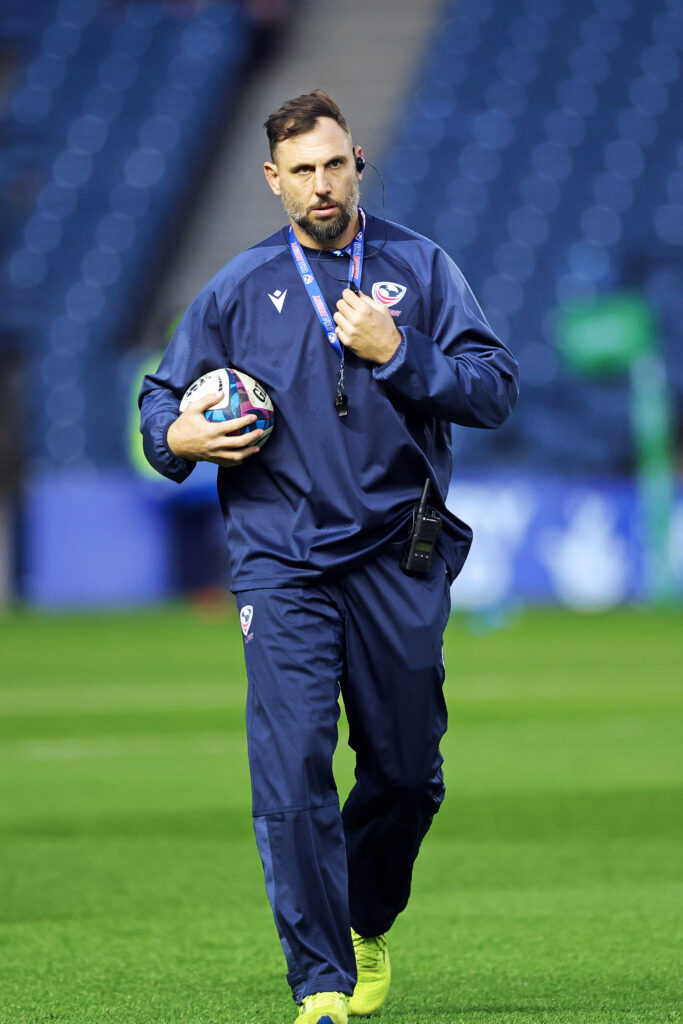
November 1, 2025: USA Rugby Eagles Men take on Scotland Rugby in the First Round Game of the Quilter Nations Series.
“I didn’t sign my contract until I knew Cuca was coming over,” Alikhan says. “That’s the level of trust we have together. I’d follow him to many places in the world.”
Will Sherman, the 2025 number one overall draft pick, puts it more bluntly: “I learned more from Cuca on the technical side of being a forward in those few weeks than I probably learned my whole time at UCLA.”
And when Conner Mooneyham imagines Anthem’s first win โ the one that will break a streak that has now stretched across two full seasons โ he doesn’t think about his own reaction first. “I’m willing to bet Cuca is going to cry out of joy,” Mooneyham says. “And then we’ll probably all follow suit.”
These are the words of players who have experienced what Agustรญn Cavalieri builds. Not just game plans or set-piece structures, but environments where young players develop faster than anyone expects โ and where experienced ones rediscover their best rugby.
From Rosario to Rome to Charlotte
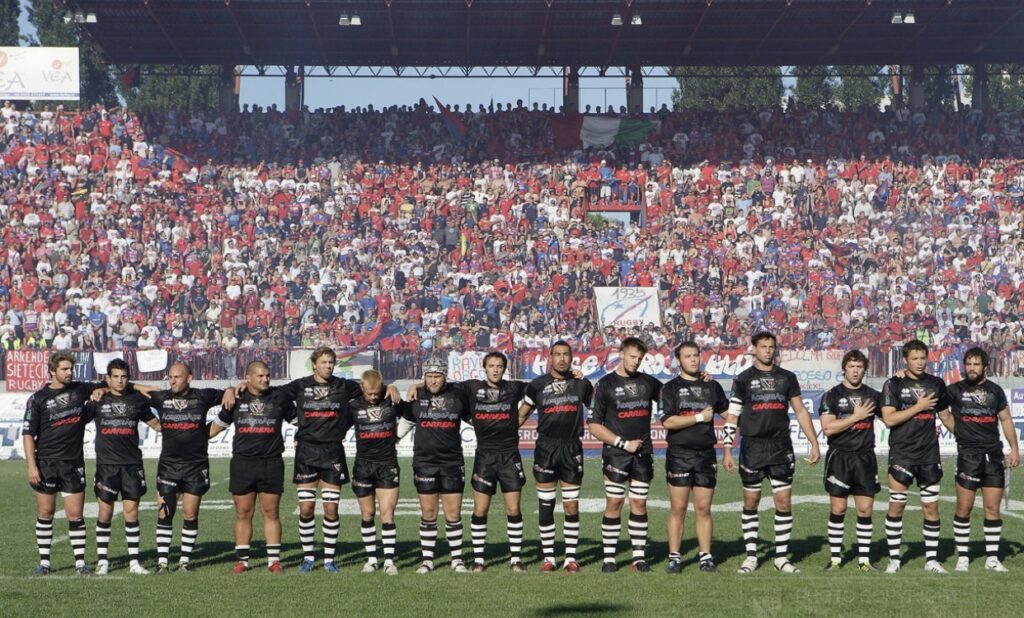
Cavalieri’s rugby education began at four or five years old in Rosario, Argentina, at the Jockey Club โ one of the city’s traditional multisport clubs where rugby is played exclusively at club level and friendships are forged for life. He represented Argentina at U19 and U21 level before injuries prompted a move to Europe at twenty, first to France and then to Italy, where he would spend fourteen years as a professional lock.
Screenshot
It was in Italy that he met his wife, started a family, and began the transition that would define his career. While playing at Calvisano, Cavalieri took over managing the lineout after an injured teammate couldn’t continue. In his first game running the set piece, they achieved 100 percent lineout retention and stole roughly half of the opposition’s throws. The coaches noticed. Other clubs called. A coaching career was born.
“When you play, you think you know everything,” Cavalieri says. “Then when you start coaching, you realize how difficult every part of the game is โ the scrum, the lineout, the kick strategy, the counterattack. I became obsessed with learning.”
The Italian Rugby Federation invited him to complete their prestigious Level 4 coaching qualification โ a program offered only once every five to ten years โ and brought him into the age-grade coaching pathway. Over eight years with the federation, Cavalieri helped develop a generation of Italian players who are now the backbone of the senior national team. He recently counted: fourteen or fifteen of Italy’s most recent Six Nations 23-man squad came through his hands at U20 level. In 2022, his Italy U20 side beat England in the Junior Six Nations for the first time in history.
The secret, he says, was a philosophy born from necessity.
“In Italy, you don’t have the numbers to be particular in selection,” he explains. “If a player can do one thing well โ even just kick โ you keep him. You invest in developing everything else. In Argentina, in England, in France, they can select. In Italy, you develop.”
That development philosophy would prove exactly what American rugby needed.
Building from zero โ twice
When the Dallas Jackals hired Cavalieri as head coach for their second season, the franchise had just gone 0-16. He diagnosed the problem quickly: sixty to seventy different players used across sixteen games. No continuity. No culture. No identity.
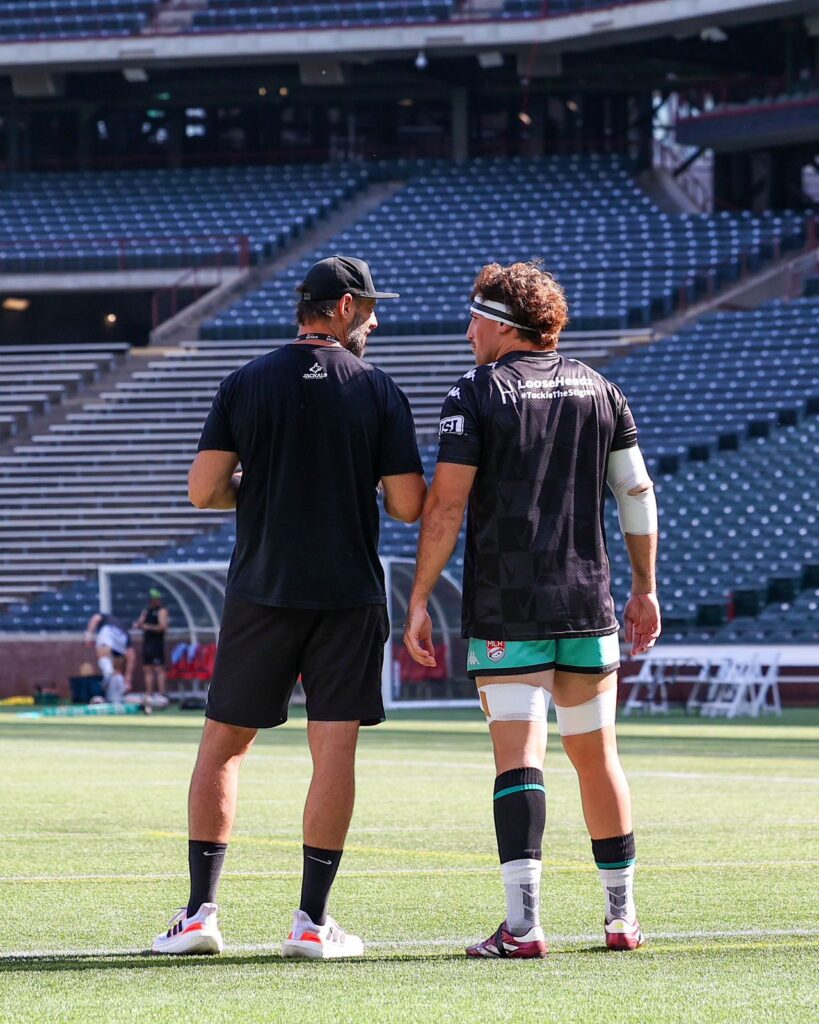
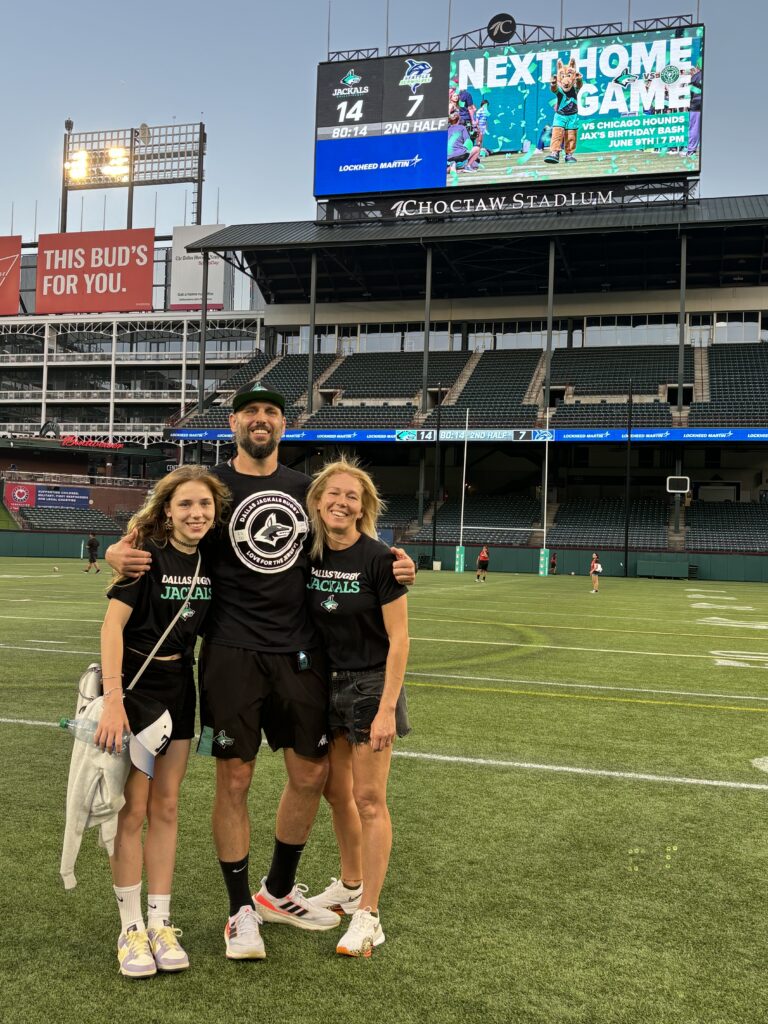
He built one from scratch. Dallas won their first-ever game in April 2023, beating Toronto 14-11. By 2024, they had improved to 6-10 and made the MLR playoffs, beating Houston in the first round before falling to Seattle in the Conference Final. Then, in September 2024, the franchise folded.
“It was terrible,” Cavalieri admits. “I was super in love with that team.”
But the relationships he had forged survived the franchise’s collapse. Alikhan and Golla followed him to Charlotte. So did the coaching bonds with players who would later end up on Anthem’s roster. And when USA Eagles head coach Scott Lawrence called to ask if Cavalieri would take over as Anthem’s head coach, the fit was obvious โ a development-first coach for a development-first franchise.
The why, not just the what
Cavalieri’s coaching philosophy centres on a simple idea: players who understand why they’re doing something will execute it far better than players who are simply told what to do.
“If you come just asking them to do some stuff and they don’t know why, they don’t buy the idea,” he says. “You have to tell them why you’re looking to do something, and then you give them the โhowโ.
He has found American players particularly receptive to this approach. “They have two very good qualities,” he says. “They are very athletic โ they can jump, they can cut, they are well-coordinated. And they are super coachable. If you come with a plan, they’re going to learn it.”
That coachability, combined with Cavalieri’s development pedigree, is what makes the Anthem partnership so powerful. As both the franchise’s head coach and the USA Eagles’ forwards coach, he occupies a role with no equivalent in American professional sport: directly responsible for building the forward pack that will represent the United States at the 2027 Rugby World Cup qualifying campaign and โ if all goes to plan โ on home soil in 2031.
“The Anthem forwards will play very similarly to the Eagles forwards,” Cavalieri says. “Scott and I talk for hours about rugby. We are both very obsessed.”
A team built to compete
The 2026 Anthem roster represents the culmination of months of planning between Cavalieri, General Manager Mark Carney, and Lawrence. Sixteen-plus new signings. Ten capped USA Eagles. Experienced internationals like James Scott, Johan Momsen, Jordan Trainor, and Ramiro Gurovich brought in specifically to drive standards and mentor the American players around them.
“If you’re going to be an international here, you have to make the difference,” Cavalieri says. “These guys are going to make the difference.”
The game plan reflects his European forward-first mentality, adapted for the athletes at his disposal. A dominant forward pack. Disruptive defense. Controlled territory through the kicking game. And when the ball is in hand, the speed and unpredictability of players like Mooneyham, Malacchi Esdale, Julian Roberts, and Jordan Trainor unleashed in transition.
“I want a very balanced brand of rugby,” he says. “Strong forwards, solid defence. But when we have the ball, I want a team that knows what they are doing in every zone of the field.”
It is, he emphasises, not about being structured for structure’s sake. It is about creating players who recognise opportunity โ and have the tools to take it.
Honour and responsibility
Cavalieri lives in Charlotte now with his wife and thirteen-year-old daughter, who speaks fluent English, Spanish, and Italian. The family came to the United States in June 2023, spent eighteen months in Dallas, and has been in Charlotte for a year. They are applying for a green card. This is home.
He speaks about the responsibility of his position with the weight of someone who understands what is at stake โ not just for Anthem’s season, but for the sport’s future in this country.
“I have a big responsibility to help rugby grow here,” he says. “All of us involved โ not just in USA Rugby, but in the league โ we have to be accountable for what we have in front of us. Big things are arriving. I want to prepare something great for the people who come after us.”
He pauses.
“If I can be there for the 2031 Rugby World Cup โ that is what I want. But if I’m not, I hope the person who takes my place will find something great that I made.”
Alikhan, who has known Cavalieri longer than any current Anthem player, offers the final word: “We’ve got a new slate, a new team, Cuca setting all the plans from the very start. We’re going to give fans a fast, brutal, physical game of rugby every weekend.”
The man who turned Dallas from 0-16 to playoff contenders in two years now has a better roster, a clearer mandate, and a coaching staff built from the ground up. The streak ends here.